How to spot Comet C/2025 R3 (PanSTARRS) this fortnight
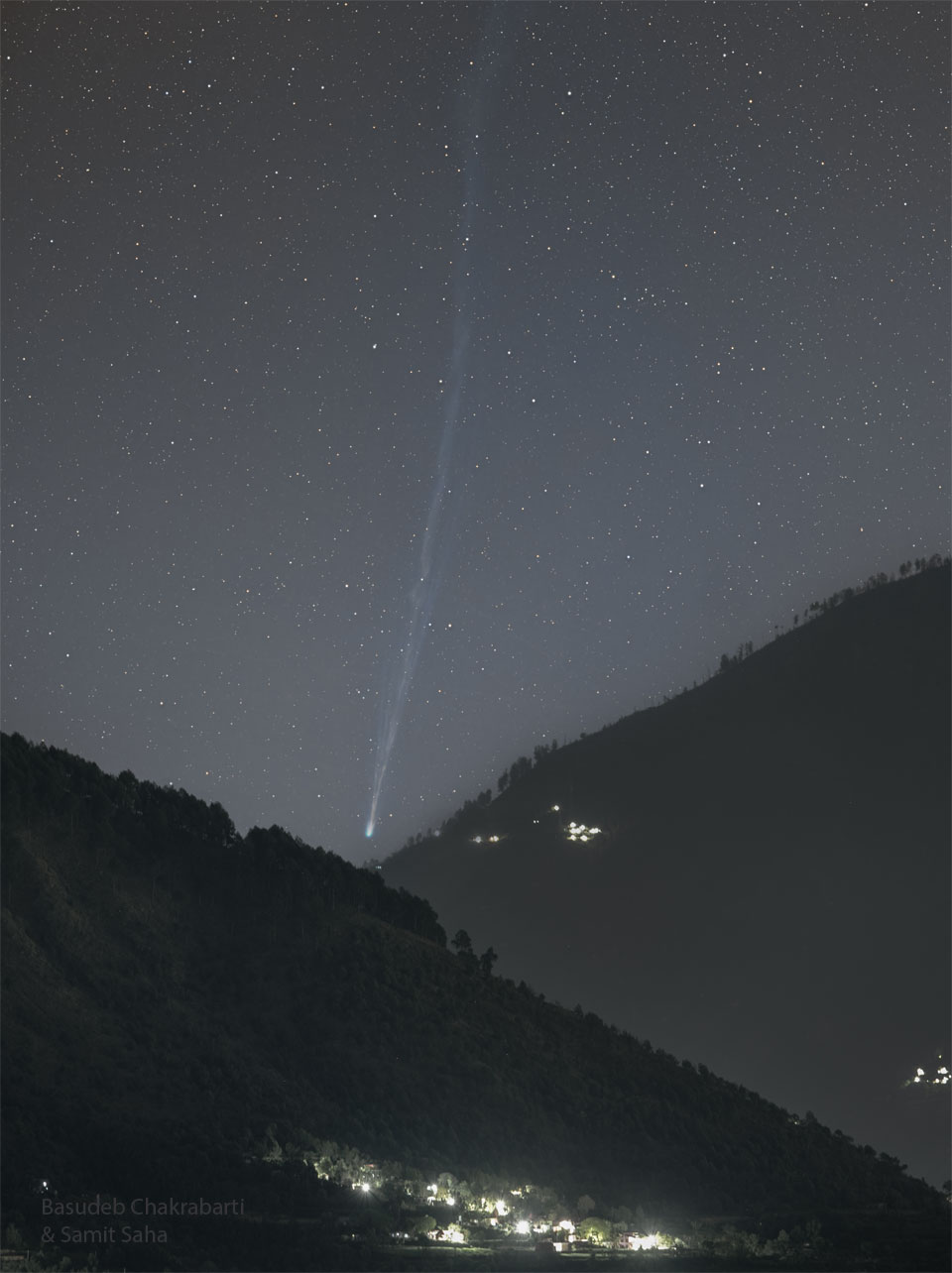
Say hello to C/2025 R3 (PanSTARRS), a distant traveller currently passing through our corner of the Solar System, offering skywatchers a rare chance to glimpse something truly ancient.
Discovered in 2025 by the Pan-STARRS survey telescope in Hawaii, this comet was picked up by one of the world’s most powerful sky survey systems. Pan-STARRS, short for the Panoramic Survey Telescope and Rapid Response System, spends its nights scanning the heavens for near-Earth asteroids, new comets, and anything else that might appear unexpectedly… including, hypothetically, the occasional Goa’uld Ha’tak warship.
When C/2025 R3 first appeared in its data, astronomers quickly identified it as a long-period comet making its way into the inner Solar System.
Earlier this month, the comet was visible in the early morning sky before sunrise, with keen observers able to spot it using binoculars, and under dark rural skies, even with the naked eye.
It reached its closest point to the Sun, known as perihelion, on April 19 at a distance of around 74.6 million kilometres. Just days later, on April 26, it made its closest approach to Earth at approximately 73.2 million kilometres.
Now, the comet has shifted into the evening sky. Since late April, it has been reappearing low in the western sky just after sunset.
For the best chance of seeing it:
- Head out around 6:30 pm
- Look low toward the western horizon
- Choose a location with a clear view, such as a beach or open coastline
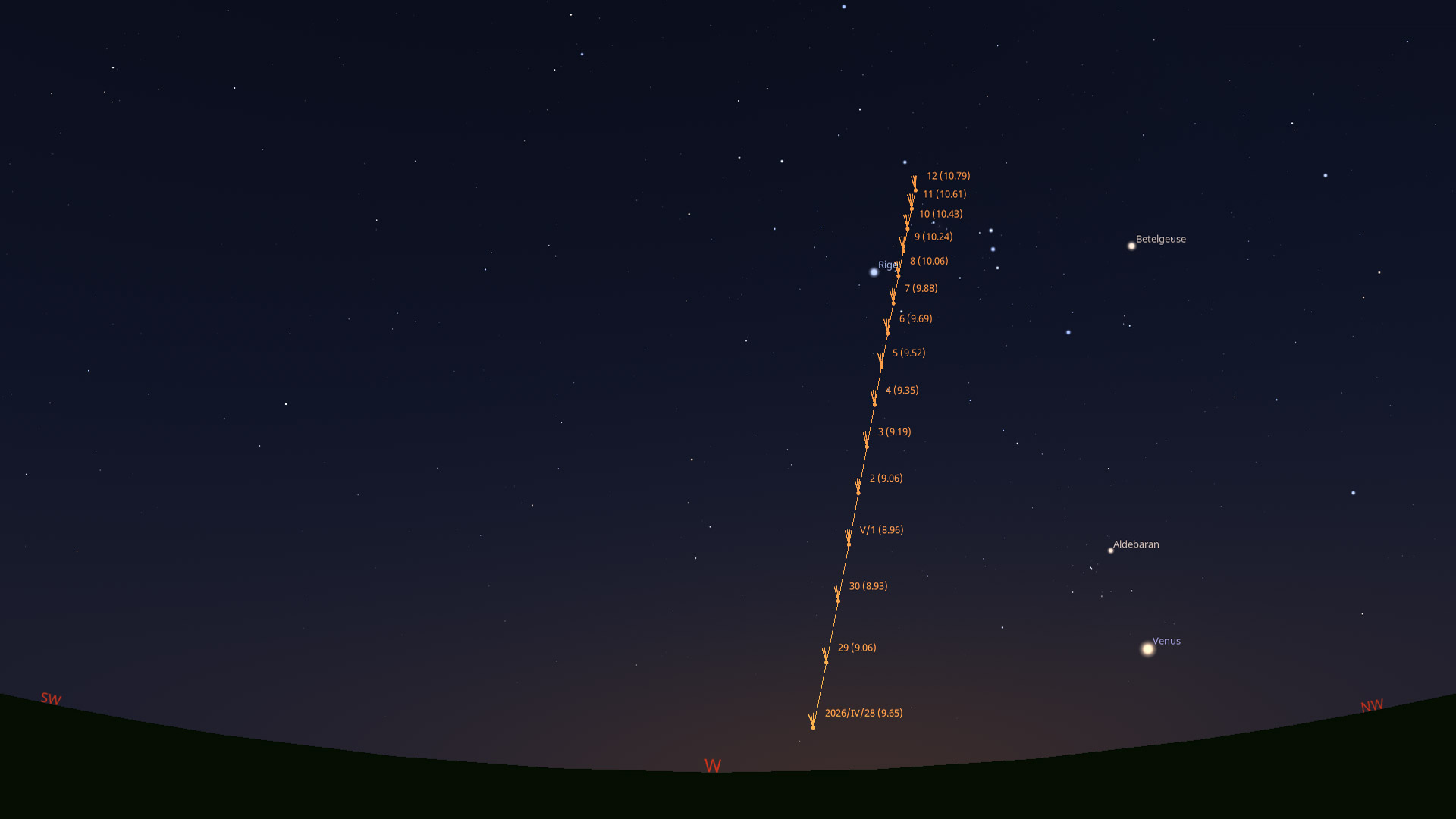
Binoculars will significantly improve your chances, while a camera with a telephoto lens and tripod can help capture this faint visitor.
With an estimated orbital period of around 170,000 years, C/2025 R3 (PanSTARRS) likely originated from the distant Oort Cloud, a vast spherical halo of icy objects surrounding the Solar System.
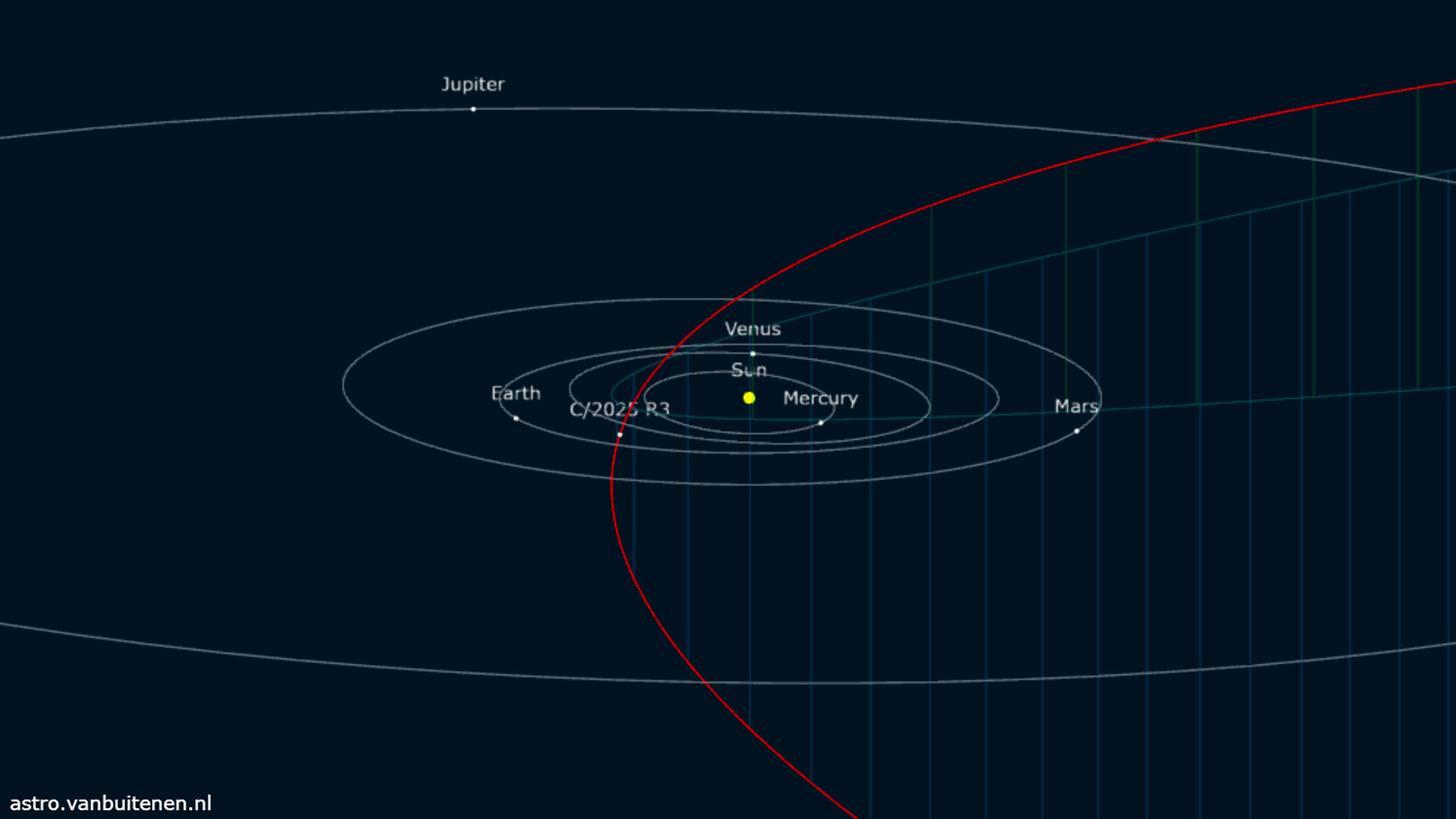
This region lies tens of thousands of astronomical units from the Sun, so far away that our star would appear as just another bright point in the sky. Objects in the Oort Cloud can take millions of years to complete a single orbit.
This means the comet you’re seeing now has likely spent an extraordinary amount of time in deep freeze, drifting silently in the darkness before being nudged inward toward the Sun.
As the comet approaches the Sun, it undergoes a dramatic transformation.
Solar heat causes frozen ices, including water, carbon dioxide, and carbon monoxide, to sublimate, turning directly from solid into gas. This process releases jets of gas and dust from the comet’s surface.
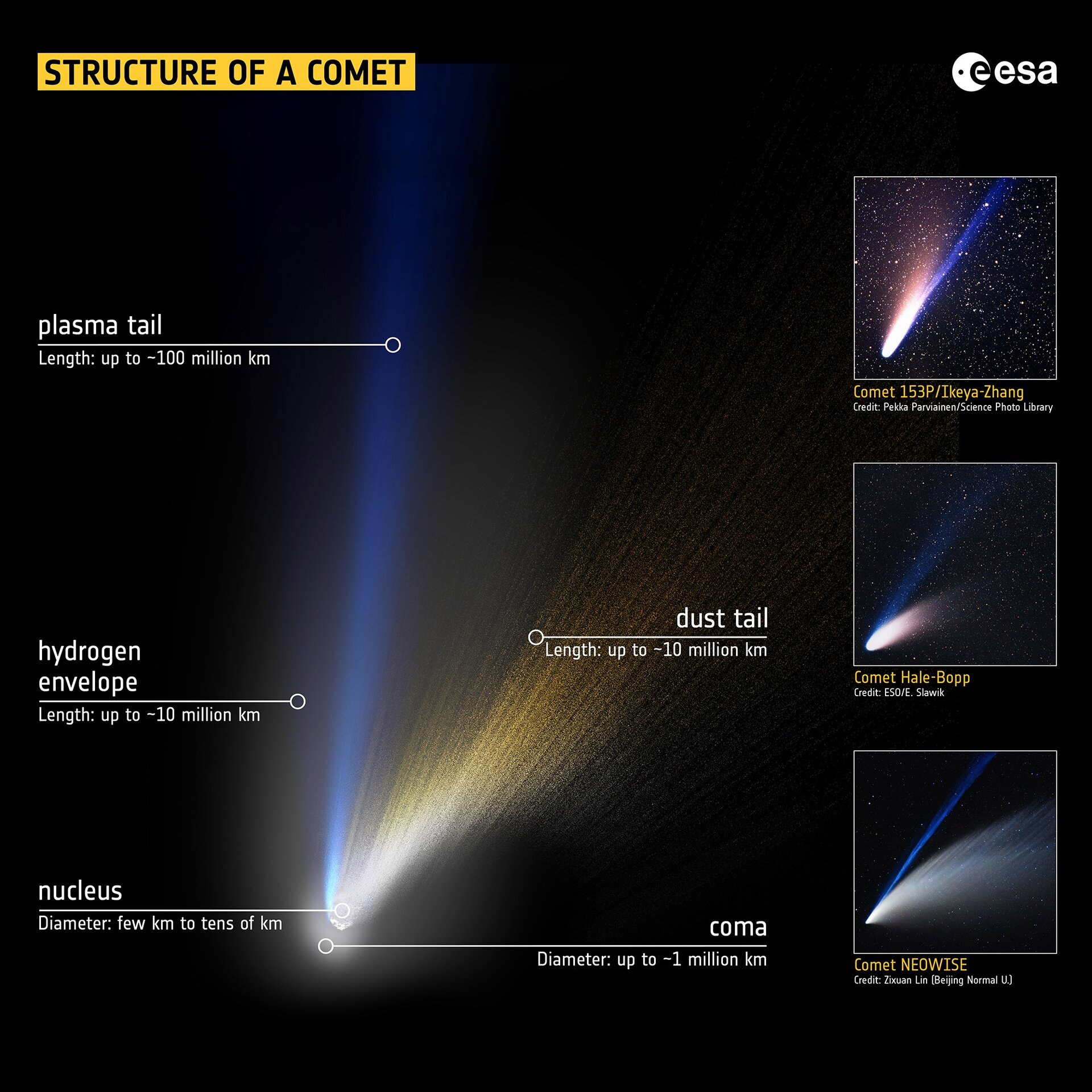
That material forms a glowing cloud known as the coma, which surrounds the nucleus. Solar radiation and the solar wind then push this material away from the Sun, creating the comet’s iconic tail.
It’s this process that transforms an otherwise invisible chunk of ice and rock into a faint, glowing object visible from Earth.
Comets like C/2025 R3 (PanSTARRS) are often one-time visitors.
Due to their extremely long orbits, it may not return for hundreds of thousands of years, if at all. Gravitational interactions with planets, particularly Jupiter, can even eject comets from the Solar System entirely.
So when you look up and spot this comet, you may be witnessing something that has not passed this way since long before human civilisation, and may never return again.
Even faint comets hold immense scientific value.
They are considered pristine remnants from the formation of the Solar System around 4.6 billion years ago. By studying their composition, astronomers can gain insight into the materials that existed during that time.
There is also strong interest in the role comets may have played in delivering water and organic molecules to early Earth, potentially contributing to the conditions needed for life.
So while C/2025 R3 (PanSTARRS) might appear as little more than a faint, fuzzy patch through binoculars, it represents something far more significant.
It is a relic from the birth of the Solar System, a frozen archive of cosmic history, and for a brief moment, it’s visible from right here on Earth.
Not bad for something you can spot just after sunset.
Banner Image Credit: Eliot Herman